LFGB Certification: The Gold Standard for Food Contact Safety
When you see a knife and fork symbol on a kitchen product, it means something important. That symbol represents LFGB certification – Germany’s rigorous food safety standard and one of the toughest in the world .
But what exactly does LFGB certification test for? Why is it stricter than other food safety standards? And why should you, as a consumer, care?
This comprehensive guide answers all those questions with detailed testing data, material-specific requirements, and practical insights.
What Is LFGB Certification?
LFGB stands for Lebensmittel- und Futtermittelgesetzbuch – Germany’s Food and Feed Code. It replaced the older LMBG (Food and Commodities Act) in September 2005 and has since become the most important basic legal document for food hygiene management in Germany .
The “Knife and Fork” Symbol
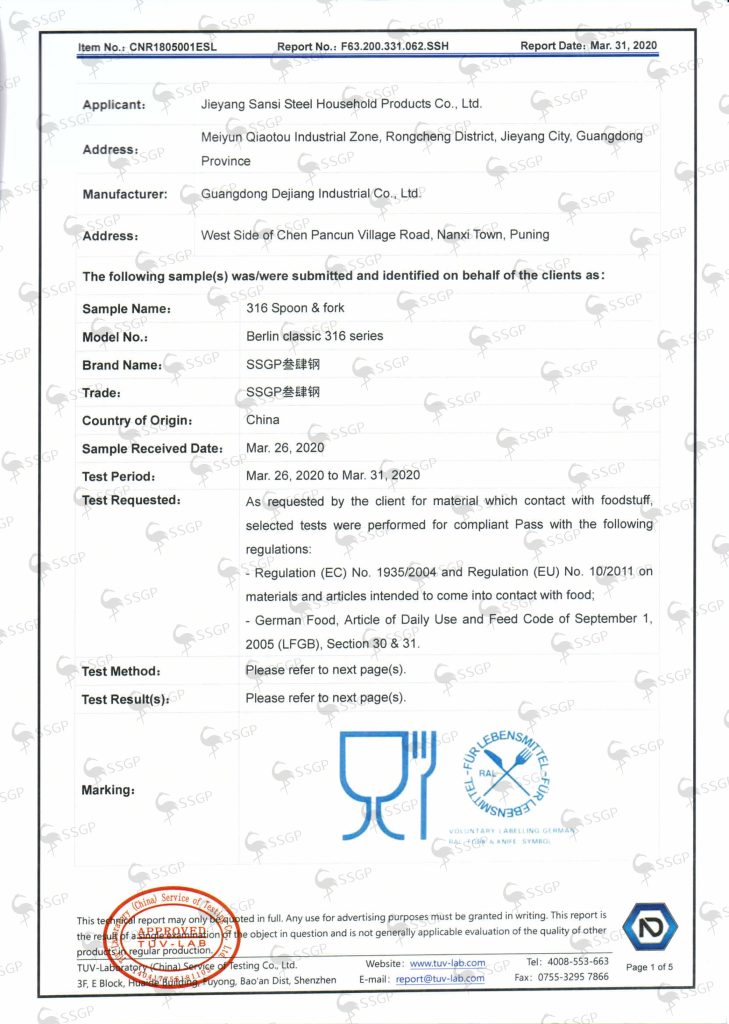
The LFGB mark features a knife and fork symbol. When you see this on a product, it means:
- The product has passed German LFGB testing
- It contains no chemically hazardous substances
- It is safe for sale not only in Germany but throughout the European market
- The product has undergone sensory testing for odor and taste transfer
Why this matters: In the European market, the “knife and fork” logo significantly increases consumer trust and product competitiveness. Products bearing this mark often command higher prices than similar uncertified products .
Why Is LFGB Certification Stricter Than Other Standards?
LFGB differs from other food-grade tests in two critical ways:
1. Sensory Testing (Section 30 & 31)
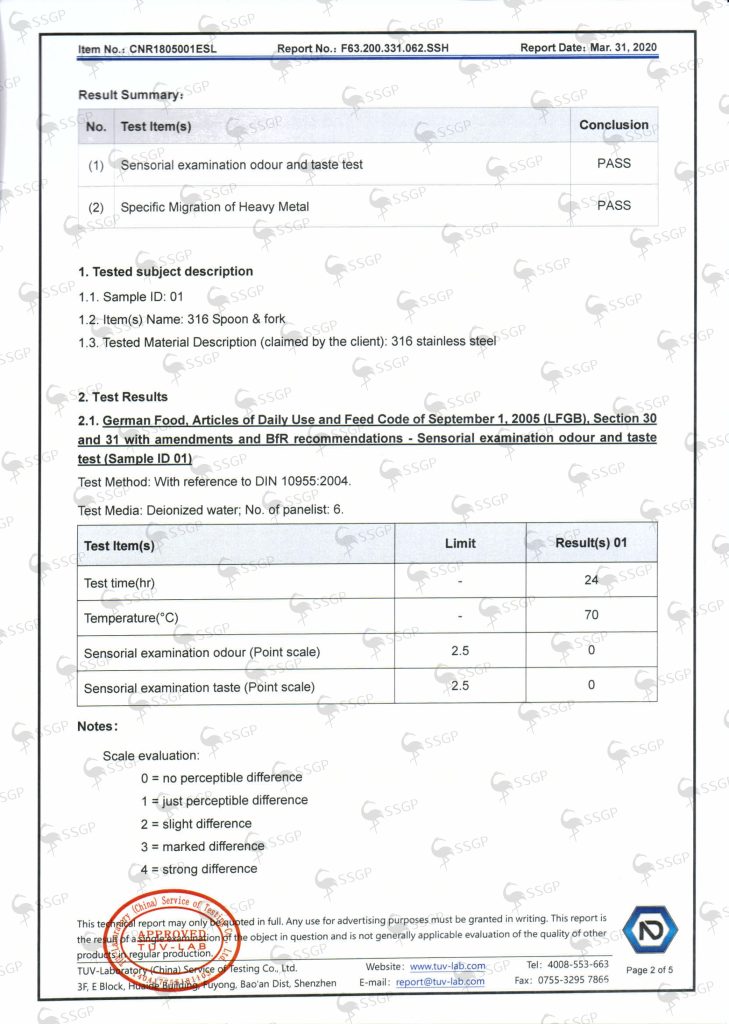
Unlike many other food safety standards, LFGB requires olfactory and taste transfer assessments – meaning trained professionals evaluate whether the material transfers any odor or taste to food .
2. More Comprehensive Testing for Plastics
Different plastic types (PC, PVC, PE, etc.) are tested according to specific standards tailored to each material. This results in more accurate, material-appropriate testing .
The result: Because LFGB requirements are stricter than other national standards, LFGB test reports are recognized and accepted by other countries – especially other EU nations .
What Products Require LFGB Testing?
The LFGB test range is broad. Any product that comes into contact with food – or may potentially contact food – must meet LFGB requirements .
Tableware
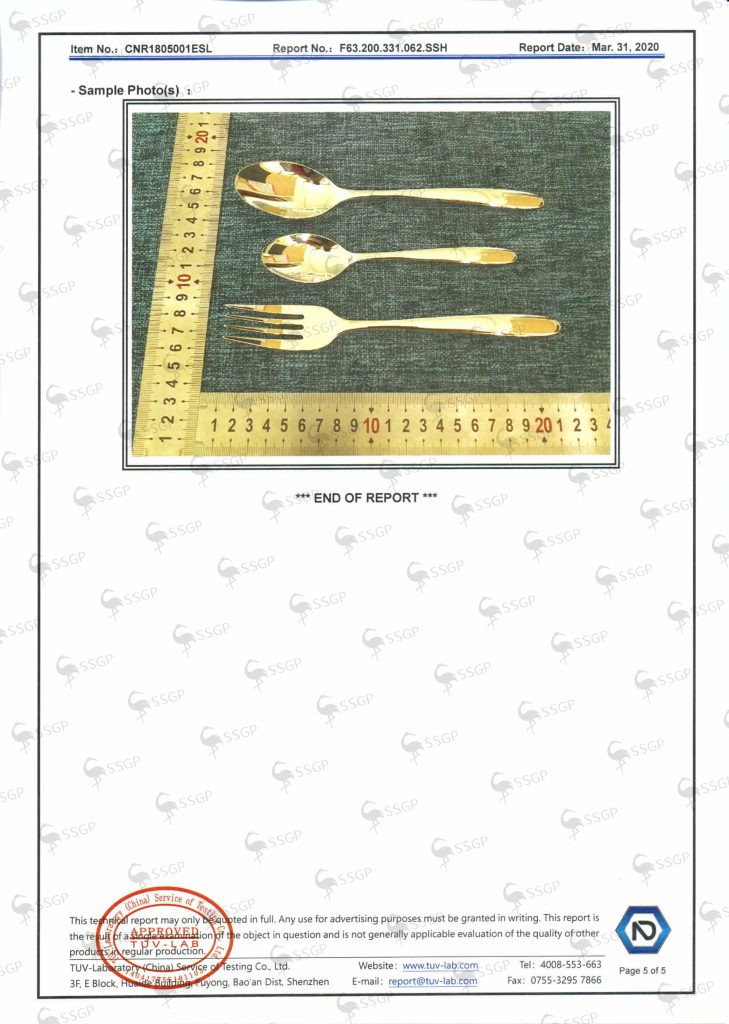
Bowls, cups, knives, forks, spoons, plates, dishes, chopsticks, trays, napkins, straws
Kitchenware
Knives, pots, spatulas, pans, peelers, cutting boards, cooking utensils
Kitchen Appliances
Juicers, coffee makers, kettles, ovens, rice cookers, toasters, blenders, food processors
Food Packaging & Storage
Plastic wrap, storage bags, containers, seasoning bottles, sealed cans, tablecloths
Children’s Products
Baby bottles, nipples, teethers, food preparation tools for babies
Bakeware & Cookware
Pressure cookers, bread makers, frying pans, steamers, soup pots, baking sheets
LFGB Testing Methods: A Technical Overview
LFGB testing combines advanced analytical chemistry with sensory evaluation. Here are the key testing methods used:
Migration Testing (Most Critical)
This simulates real-world food contact conditions. The material is exposed to food simulants – liquids that mimic different food types:
| Simulant | Represents | Common Conditions |
|---|---|---|
| Distilled water | Neutral foods | 40°C for 10 days |
| 3% acetic acid | Acidic foods (tomatoes, citrus) | 40°C for 10 days |
| 10-50% ethanol | Alcoholic beverages | 40°C for 10 days |
| Olive oil | Fatty/oily foods | 40°C for 10 days |
What is measured? Total non-volatile substances released into the simulant. The standard limit is typically 10 mg/dm² .
Heavy Metal Testing
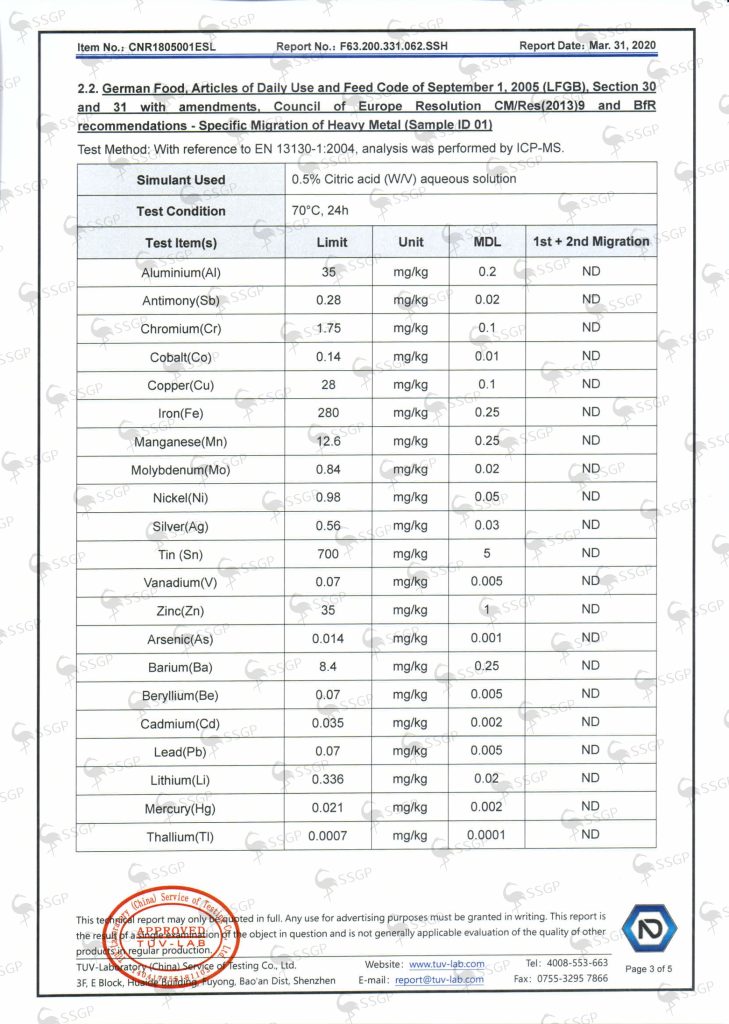
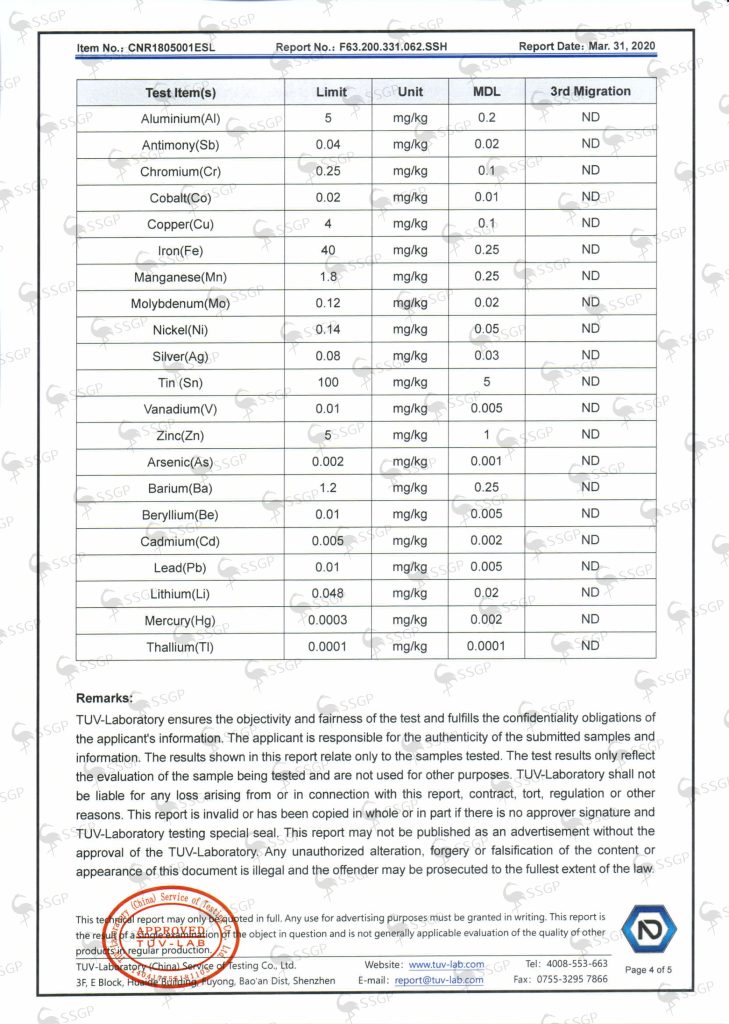
Using ICP-MS (Inductively Coupled Plasma Mass Spectrometry) – a device sensitive to parts per billion (ppb) – labs measure toxic metal release :
| Metal | Typical Limit | Why It Matters |
|---|---|---|
| Lead (Pb) | 0.01 mg/dm² | Neurotoxin, especially harmful to children |
| Cadmium (Cd) | 0.005 mg/dm² | Carcinogen, accumulates in kidneys |
| Chromium (Cr) | 0.4 mg/dm² | Some forms (Cr-VI) are carcinogenic |
| Nickel (Ni) | 0.1 mg/dm² | Common allergen, can cause contact dermatitis |
| Cobalt (Co) | Not detectable | Potential respiratory irritant |
GC-MS for Organic Compounds
Gas Chromatography-Mass Spectrometry detects volatile organic compounds (VOCs), plasticizers (phthalates), and other organic contaminants at levels as low as 0.01 mg/kg .
Sensory Evaluation (Unique to LFGB)
Trained panelists evaluate whether the material transfers:
- Any odor to food
- Any taste to food
- Any color to food
This test is performed under standardized environmental conditions (temperature, humidity, lighting) .
LFGB Testing Standards by Material Type
Different materials face different testing requirements. Here are the key standards for common materials:
Metals and Alloys
(Relevant for stainless steel flatware, cookware, etc.)
| Test | Method | Limits |
|---|---|---|
| Heavy metal extraction | LFGB §35 B 80.03-1/2 | Lead: 0.01 mg/dm², Cadmium: 0.005 mg/dm² |
| Chromium release | 0.4 mg/dm² | |
| Nickel release | 0.1 mg/dm² | |
| Sensory testing | §30 & 31 | No odor/taste transfer |
The European standard EN 1186 series provides the testing methodology for metal migration .
Plastics
| Material | Key Tests | Limits |
|---|---|---|
| PE / PP | Catalyst residues (Cr, V, Zr), peroxide value | Cr: 10ppm, V: 20ppm, Zr: 100ppm |
| Polycarbonate (PC) | Sulfate ash, BPA migration | 0.50% ash max |
| Polystyrene (PS) | Volatile organic matter, peroxide residue | 15 mg/dm² VOM |
| Polyamide (PA) | Primary aromatic amines | Not detectable |
| PET | Catalyst residues (Sb, Ge, Co, etc.) | Sb: 350ppm max |
Silicone Rubber
(Used in baking molds, spatulas, seals)
| Test | Limit |
|---|---|
| Total extractable components | 0.50% |
| Volatile organic matter (VOM) | 0.50% |
| Organotin compounds | Varies by type |
| Peroxide residue | Not detectable |
| Sensory testing | No odor/taste |
Ceramics and Glass
| Test | Limit (for hollowware) |
|---|---|
| Lead release | 0.8 mg/dm² (for large hollowware) |
| Cadmium release | 0.07 mg/dm² |
Paper and Board
| Test | Limit |
|---|---|
| Pentachlorophenol (PCP) | 0.15 mg/kg |
| Extractable heavy metals | Varies |
| Formaldehyde | Varies |
| Azo dyestuffs | Restricted |
Non-Stick Coatings (PTFE, etc.)
| Test | Limit |
|---|---|
| Phenol release | 0.05 mg/dm² |
| Formaldehyde release | 15 mg/kg |
| Primary aromatic amines | Not detectable |
| Total fluoride | 0.05 mg/dm² |
Wood Products
(Cutting boards, utensils)
| Test | Limit |
|---|---|
| Pentachlorophenol (PCP) | 0.15 mg/kg |
| Formaldehyde release | 0.1 ml/m³ |
| Sensory testing | No odor/taste transfer |
The LFGB Certification Process
Here’s what it takes to get a product LFGB certified:
Step 1: Sample Preparation
The manufacturer provides product samples that are representative of actual production. Multiple samples may be needed for different test types.
Step 2: Laboratory Testing
Samples are sent to an accredited testing laboratory equipped with:
- Gas chromatographs (GC-MS)
- Liquid chromatographs (HPLC-UV)
- ICP-MS for heavy metals
- Thermogravimetric analyzers (TGA)
Step 3: Migration Testing
Materials are exposed to food simulants under controlled conditions (time, temperature). The simulants cover:
- Aqueous foods (distilled water)
- Acidic foods (3% acetic acid)
- Alcoholic foods (10-50% ethanol)
- Fatty foods (olive oil or other fatty simulants)
Step 4: Sensory Evaluation
Trained panelists assess for odor and taste transfer under standardized conditions.
Step 5: Data Analysis
Results are compared against LFGB limits. Any exceedance triggers failure.
Step 6: Report Issuance
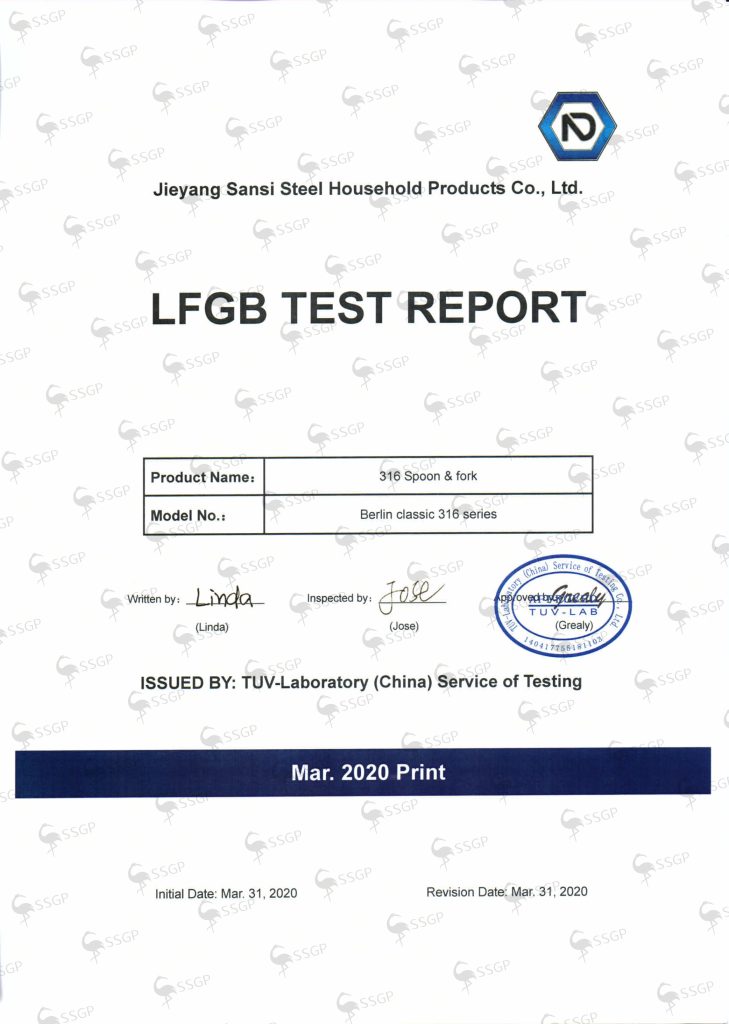
If all tests pass, the lab issues a formal LFGB test report – typically valid for one year or until material/process changes .
Typical Timeline & Cost
| Service | Time | Cost (USD) |
|---|---|---|
| Basic testing (1-2 materials) | 10-15 business days | 1,000−2,500 |
| Complex product (multiple materials) | 15-20 business days | 2,500−6,000+ |
| Expedited service | +30-50% fee | Add 30-50% |
Why LFGB Matters for Consumers
1. It Tests What Other Standards Miss
Unlike basic FDA compliance (which focuses on composition), LFGB tests actual migration under real-world conditions – plus sensory impacts that would ruin your food.
2. It Catches Harmful Leaching
Heavy metals, plasticizers, and other toxins can migrate from cookware into your food. LFGB sets strict limits and verifies compliance through rigorous testing .
3. It’s Especially Important for Children’s Products
Baby bottles, nipples, and children’s tableware fall under LFGB scope. The standard is particularly strict for products intended for children .
4. The Knife and Fork Symbol Is a Reliable Shortcut
When shopping, look for the knife and fork symbol. It’s your assurance that an independent lab has verified the product’s safety.
Frequently Asked Questions
Is LFGB the same as FDA approval?
No. FDA regulates food contact materials in the US, but its requirements are different (and generally less comprehensive). LFGB includes sensory testing that FDA does not require. An LFGB-certified product exceeds FDA requirements .
How long is an LFGB certificate valid?
Typically one year, or until the product material or manufacturing process changes. After that, retesting is required.
Does LFGB cover antimicrobial claims?
Yes. If a product claims antibacterial properties (like silver-ion coatings), LFGB testing includes microbial testing – typically requiring ≥99% kill rate against specified bacteria like E. coli and S. aureus .
Can I trust a product with the knife and fork symbol?
Generally, yes – but verify that the symbol comes from an accredited testing lab. Reputable manufacturers provide the actual test report upon request.
Does LFGB apply in the United States?
LFGB is a German/EU standard, not legally required in the US. However, many premium brands voluntarily LFGB-certify their products for export to Europe – and US consumers benefit from the higher safety standard.
Conclusion
LFGB certification isn’t just a stamp – it’s rigorous scientific validation that the materials touching your food are safe. From heavy metal migration limits measured in parts per billion to sensory tests that ensure your steak doesn’t taste like silicone, LFGB sets the global benchmark for food contact safety.
When you see the knife and fork symbol, you’re looking at a product that has passed some of the toughest food safety standards on earth.
References
- 食品包装材料LFGB认证办理要测哪些项目. 环测威检测. 2025
- 食品接触材料LFGB测试产品范围及测试项目. 环测威检测. 2024
- 食品包装材料LFGB认证测试项目及流程. 环测威检测. 2025
- German food contact material testing. NTEK Testing Technology. 2024
- 食品接触材料LFGB认证测试项目及流程. 环测威检测. 2025
- LFGB测试标准及费用. 中析研究所检测中心. 2025
- 德国食品级材料LFGB认证简介. 嘉峪检测网. 2014
- German food contact materials testing. ZRLK Laboratory. 2024
- German—LFGB. STQ Testing Services. 2024
- 德国LFGB食品级检测. 瑞通检测. 2017
Last updated: May 2026